
Metal and mining companies, such as Tata Steel, JSW Steel, Hindalco, and Coal India, have been among the top-performing sectors on the bourses in recent months. The S&P BSE Metal Index is up 13 per cent in the past three months, rallying 29 per cent in the past year, outperforming the broader market. For comparison, the benchmark S&P BSE Sensex has only seen a 1.7 per cent increase in the past three months, with a 15 per cent gain since the end of September last year.

Second-tier NBFC stocks are trading at 24.4x their trailing earnings, which is nearly twice their 15-year average of 13.9x
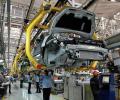
The K-shaped economic recovery in India from the pandemic slowdown shows in corporate results as well. The automobile sector, which represents big-ticket consumption, continues to do well and has increased its share in corporate revenues and profits while fast-moving consumer goods (FMCG) companies that sell low-ticket consumer goods are struggling with poor sales and earnings growth. The share of the automobile sector, including makers of auto ancillaries, in corporate net sales rose to a 10-quarter high of 10.05 per cent during July-September 2023 (Q2FY24) from 8.94 per cent a year earlier and 9.75 per cent in Q1FY24.

Even as the slowdown in the information technology (IT) services sector deepens, banking, financial services and insurance (BFSI), as well as oil and gas companies, emerge as the primary drivers of corporate earnings in the country. The IT services sector's share in corporate earnings declined to a five-year low of 17.4 per cent in the second quarter (Q2) of 2023-24 (FY24), whereas banks and finance companies accounted for 46.5 per cent, and oil and gas firms contributed 16.8 per cent. At their peak, IT services firms like Tata Consultancy Services (TCS), Infosys, HCLTech, and Wipro represented just over a third of the combined net profit of all listed companies in the Business Standard sample.

Banks are gaining market share at the expense of non-bank lenders such as housing finance companies, retail lenders, and those giving gold loans. There has been a steady decline in the market share of non-banking financial companies (NBFCs) in the credit market as banks have stepped up lending. NBFCs' share declined to a five-year low of 19.8 per cent in the first half of FY23, down from 20.3 per cent in H1FY22, and an all-time high of 23.1 per cent in H1FY19.

The rupee breached the 80-mark against the dollar on Tuesday. The steady depreciation in the value of the rupee against the US dollar is likely to prove expensive for corporate India. The listed companies' revenue expenses in foreign currency or imports exceed their export revenues or revenue earnings in forex. In their latest financial year, BSE500 companies, excluding banks and non-banking finance companies and insurance (BFSI), reported combined forex expenses of Rs 12.31 trillion against forex earnings of around Rs 10 trillion.

The recent surge in crude oil prices could shave off the gains made by India Inc in profit margins in the past few quarters. Worse, it comes at a time when consumer demand in the country is slipping and major global economies are witnessing a slowdown. A back-of-the-envelope calculation suggests that the margin expansion accounted for three-fourths of the rise in the listed firms' operating profit between the April-June quarter (Q1) of FY23 and Q1FY24, and only a quarter of profits gains came from revenue growth.

The market's sensitivity to the US Fed's balance sheet changes makes it vulnerable to the possible tapering of the bond buying programme and the resulting stagnation or even shrinkage in the balance sheet.

The early bird results for the January-March quarter of 2022-23 (Q4FY23) show a pick-up in earnings growth, despite a slowdown in revenue growth, thanks to a decline in input costs and lower provisioning for bad loans by banks. The combined net profit of 66 companies that have, so far, declared their quarterly results was up 15.2 per cent year-on-year (YoY) in Q4FY23, an improvement from 4.3 per cent YoY growth in Q3. Net sales growth of these companies, however, slowed down to 11.5 per cent YoY in January-March 2023, the slowest rate in eight quarters.

The ruble has recouped most of its losses and become the top-performing currency globally. It continues to gain and is up 60 per cent against the US dollar from its lows in the first week of March. The ruble appreciated to 83 to the dollar intraday on Tuesday against a record low of 139 on March 7.

Domestic equity markets are in elite company. In May, Indian markets joined select developed markets (DMs) such as the US, UK and Germany to record new all-time highs. Among emerging markets (EMs), Brazil is the other market to have logged new highs this month. Asian peers such as South Korea, Taiwan and New Zealand are currently between 2 per cent and 10 per cent below their previous highs made earlier this year. The domestic markets were among the worst-performing major global markets in April amid a lethal second-wave of covid-19 infections.

A slowdown in hiring by India's top IT companies has resulted in a sharp increase in the industry's profit per employee in Q3FY23. The top four IT companies earned a net profit of 1.7 lakh per employee during October-December 2022, up 8.6 per cent from Rs 1.57 lakh in Q2FY23 and 16.3 per cent from a record low of Rs 1.47 lakh in Q1FY23. Earnings per employee in the third quarter were, however, still down 0.9 per cent on a year-on-year (YoY) basis.

The earnings of India Inc hit a record high in the 2022-23 (FY23) January-March quarter (fourth quarter, or Q4), compared with their poor showing in the previous two quarters of the financial year. The rise in earnings, however, is exclusively led by banking, financial services, and insurance (BFSI) companies. A better-than-expected showing by banks and non-bank lenders in Q4FY23 more than compensated for the earnings contraction in the non-BFSI space.

Manufacturing companies have been outperformers on the bourses in the current year, leading to a rise in their weighting in the benchmark index. Companies in sectors such as FMCG, automobile, pharmaceuticals, metals, cement, and agrochemicals now account for 25.43 per cent of the Nifty 50 index, up 88 basis points from 24.55 per cent at the end of December last year and a record low of 23.1 per cent at the end of CY20. The manufacturing sector is now dominated by FMCG majors such as Hindustan Unilever, ITC, Asian Paints, Nestle, and Britannia, accounting for 45 per cent of the combined market cap of all manufacturing companies in the index.

The stellar rise in corporate earnings in financial year 2021-22 (FY21) and FY22 did not result in a corresponding boom in capital expenditure (capex), with listed companies' investment in fixed assets rising just 2.3 per cent year-on-year (YoY) in FY22, growing at the slowest pace in the last six years. In comparison, the firms' combined net profit jumped 63.5 per cent YoY in FY22, while net sales increased 31.1 per cent - the fastest pace in over a decade. The 955 non-financial companies in Business Standard's sample reported combined net profit of Rs 7.18 trillion in FY22, compared with Rs 4.39 trillion in FY21 and Rs 2.59 trillion in FY20.

After outperforming the broader market and their public sector peers for the better part of the post-Lehman period, private sector banks - such as HDFC Bank, ICICI Bank, Axis Bank, and Kotak Mahindra Bank - are now underperforming. Last week, the Nifty Private Bank index was up just 6 per cent year-to-date in the calendar year 2021, against nearly 13 per cent rally in the Bank Nifty and a 15 per cent rise in the benchmark Nifty50. Public sector (PSU) banks, such as State bank of India, Bank of Baroda, and Punjab National Bank, are now rally leaders and outperforming the broader market. The Nifty PSU Bank index was up 42 per cent since the beginning of this calendar year. But on a longer term, the Nifty Private Bank index is up 101 per cent since March 2016, against a 118 per cent rally in the Bank Nifty and just 2 per cent rise in the Nifty PSU Bank index in the period.

'Companies are being forced to pay higher salaries to retain and hire employees due to a big rise in attrition in the industry.'
The combined profit before tax of 748 companies, which have declared their results for Q1FY21, is down 46 per cent YoY. Their net sales went down by a quarter as the Covid-19 lockdown led to a sharp fall in economic activity.
Corporate margins and profits in India remain vulnerable to changes in crude oil prices in the international market. Historical quarterly data from listed companies (excluding banks, finance and insurance, oil and gas, and power sectors) indicate an adverse correlation between corporate margins and crude oil prices.

A sharp sell-off in the Indian equities markets after a spike in crude oil prices should not be surprising. Historically there is a negative correlation between stock valuations in India and the price of Brent crude oil, which is the benchmark for the Indian crude oil basket. Between 2011 and 2014, crude oil traded above $100 a barrel for an extended period, the Sensex-trailing price/earnings (P/E) was 18X, on average, during the period, nearly 22 per cent lower than the current index P/E of 23X.

The biggest headwind to the consumption story in FY23 is a sharp decline in government subsidies on food, fertiliser and fuel, and overall decline in revenue expenditure net of interest payments. This, analysts say, will adversely impact purchasing power of households at the lower end of the income pyramid, translating into lower spending on consumer goods and services.

The latest circular from BSE that sought to cap the price movement of select scrips, especially the mid-, small-cap segments, traded on the exchange is not without a reason. A quick calendar year-to-date price check on the stocks from the categories put under 'Add-on Price Band Framework' by the BSE reveals a total of 210 stocks have seen their market price more than double. Among individual stocks, SC Agrotech, Adinath Textiles, Waaree Renewable Technologies, Steel Strips Infrastructure, Unistar Multimedia, Texel Industries, Raja Bahadur International and Hindustan Everest Tools from the BSE's X and XT group have rallied over 500 per cent during this period. Topping the charts is Gita Renewable Energy, which has zoomed 3,964 per cent to Rs 272.35 now from Rs 6.7 as on December 31, 2020.
The early bird results for the January-March 2022 quarter (Q4FY22) hint at a slowdown in corporate sector growth in the upcoming quarters. The combined net sales of the 81 early bird companies in the Business Standard sample were up 15.1 per cent year-on-year in Q4FY22; this was less than the 15.9 per cent YoY jump reported in Q3FY22. The slowdown could be much stronger for the domestic market-focused companies, including those in the banking, finance, and insurance (BFSI) space.

Analysts worry about possible loan waiver.

Asset quality stress has ballooned recently, as growth slowed and interest rates continued to rise.

Most markets have seen significant erosion in investors' wealth this year

Emerging markets such as India have always run higher inflation rates than developed economies such as the US and countries of Western Europe. But for the first time in the past 30 years, the US reported a higher consumer price inflation (CPI) rate than India in five consecutive months. The US reported a CPI rate of 7.5 per cent in January 2022 against 6.01 per cent in India and analysts expect the trend to continue for at least a few months more

This year, the combined net profit of 24 index companies, which have declared their June-20 numbers, has declined by 37 per cent year on year, while their revenues, including other income, is down by 21 per cent YoY so far.

Inflows from Europe, falling crude oil to come to the rescue if rupee cracks against the dollar.

This is first time in 25 years that a benchmark equity index in India is trading at a P/E multiple of 40x or higher.

In the manufacturing sector, output is expected to decline by about 70 per cent as only food-processing, and drugs and pharma industries are allowed to operate while other segments, such as engineering and metals, have shut operations.
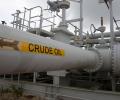
There is positive correlation between crude oil prices and Indian equities and investors can expect more upside after the recent rally in Brent crude price.

Indians face COVID-19 with record debt, stalled income.

Thirteen companies have joined the Rs 1-trillion-plus market capitalisation club this year, so far. This even as the benchmark Sensex has gained less than 3 per cent on a year-to-date basis, underscoring the bullish undercurrent in the broader market. The trend shows a harsh second wave of Covid-19, subsequent lockdowns, and hit to the economic activity has made little dent into India Inc or shareholders' wealth. At the start of the year, there were 29 companies with a market value of more than Rs 1 trillion.

Markets

The rupee has depreciated 2.35 per cent in the past three months and one per cent in the past month, despite strong capital flows and falling oil prices.

Inflation trajectory does not match the slump in demand, prolonged pause on rates likely.

In three of the past four years, 10-year returns have been 10 per cent or lower, making equity unattractive, compared to other asset classes.

Though Indian banks don't have large exposure to subprime mortgages, analysts are worried at the rise in their restructured loan portfolios and deterioration in credit quality.

Combined net profit of BSE500 companies at $ 63 bn is 2.3% of GDP; global average is 5%.
